COVID-19 Belief Networks
// Quick Summary
- Surveyed over 2,000 U.S. participants' beliefs about COVID-19 severity, political distrust, and medical skepticism prior to and during the first wave of cases
- Identified two preexisting distrust types: medical and political
- Bayesian models reveal that vaccine and political distrust existed prior to the pandemic's first wave in the U.S.
- Distrust expanded to include large medical organizations over the course of the pandemic
- Medical misinformation targeted lingering anti-science views
Key Findings
Lingering distrust in Democratic politicians most strongly predicted COVID-19 skepticism during the first wave of cases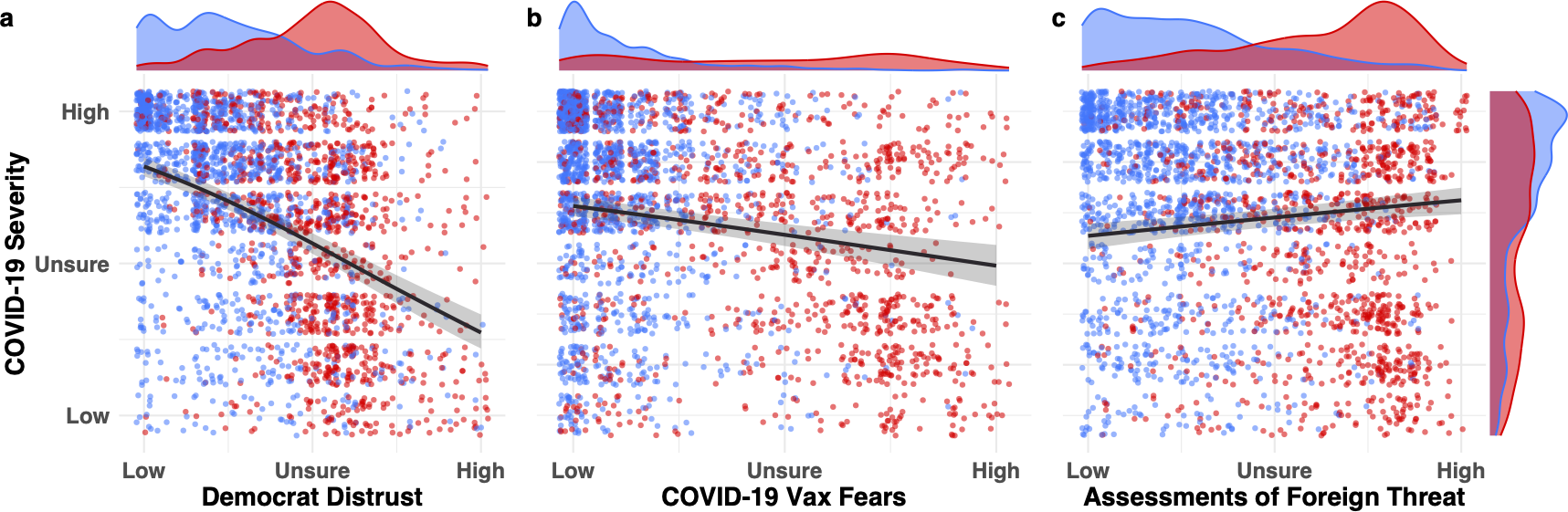
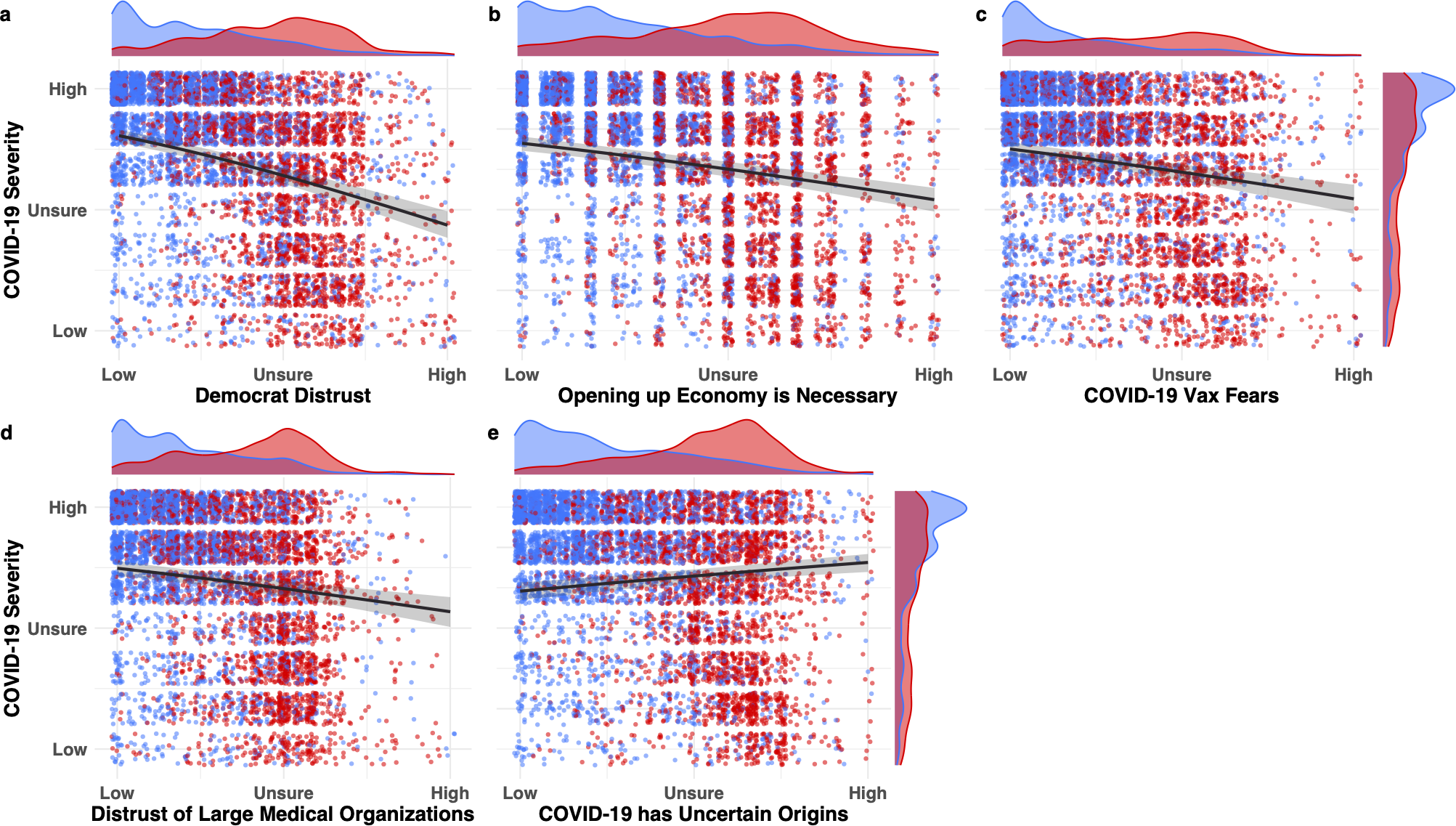
- Two coherent belief networks emerged: one pro-science, one skeptical
- Distrust in scientists and politicians predicted COVID-19 skepticism, even after controlling for partisanship
- Beliefs were internally coherent, even if incorrect by scientific standards
- Distrust expanded to include large medical organizations over the course of the pandemic
- Medical misinformation targeted lingering anti-science views
Why It Matters
People interpret scientific information through systems of beliefs. This study shows how belief systems update over the course of complex chains of events. Bayesian models fit to survey responses gathered prior to and during the first wave of cases demonstrate how internally coherent sets of beliefs can lead individuals to radically different conclusions about science, health, and public policy.
- Public health use case: Understanding how belief systems shape vaccine hesitancy or mask resistance allows health organizations to design better communication strategies that account for underlying distrust and broader belief systems.
- Research use case: A behavioral scientist modeling political narrative interaction can apply the modeling framework to explore how clusters of belief influence evidence assimilation, belief change, and reasoning about social issues.
How the Study Was Conducted
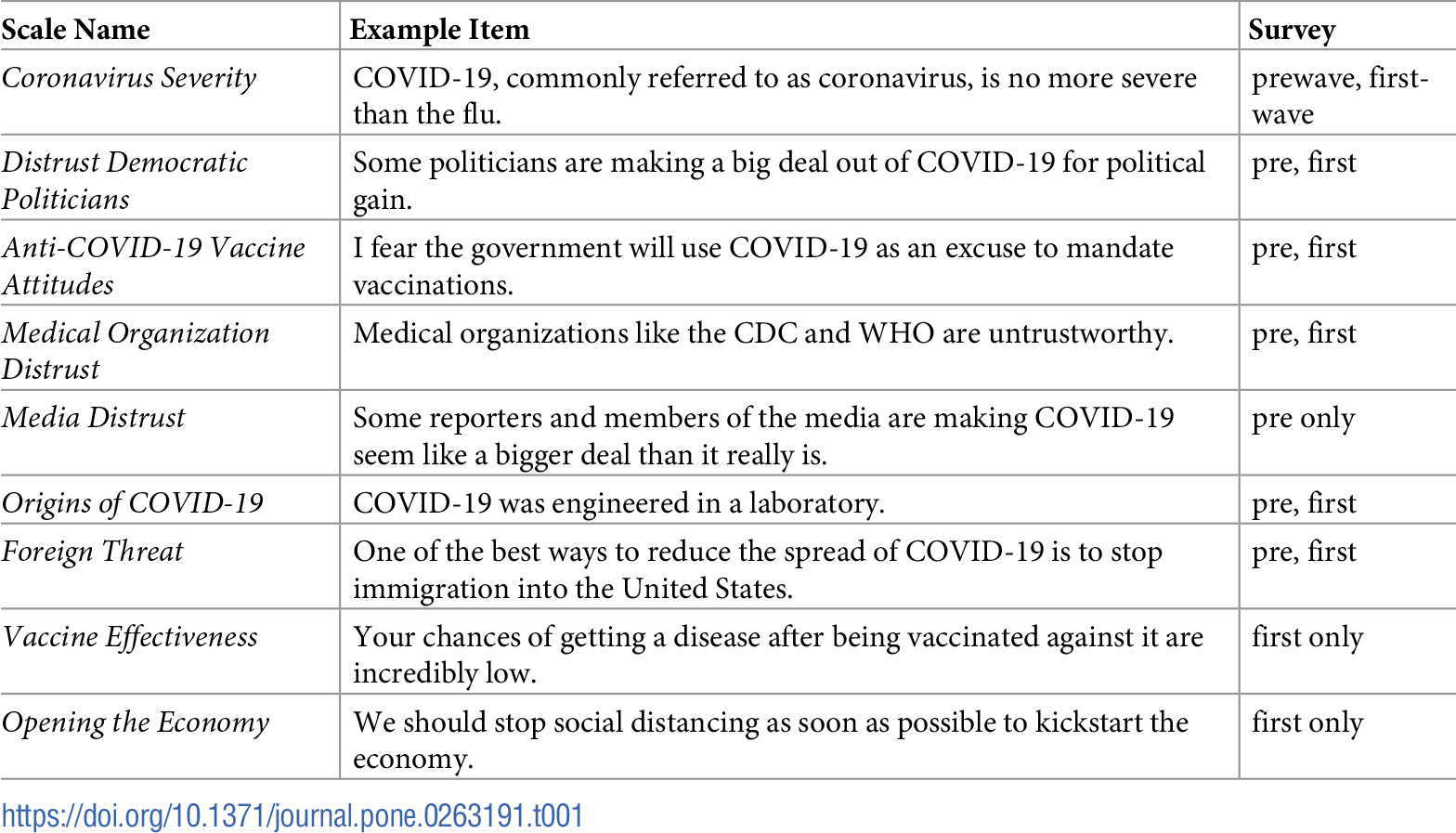
Surveys administered in early 2020 allowed for identification of lingering belief networks shaping COVID-19 attitudes.PNG)
- Survey Design:
Developed a 62-item belief inventory covering science, medicine, politics, and pandemic-specific topics (e.g., lockdowns, vaccines, mortality). - Participant Sample:
Recruited a nationally representative U.S. sample (N = 2,014) in April–May 2020 via YouGov. - Bayesian Coherence Modeling:
Used Bayesian multilevel models to evaluate how belief systems cohered within individuals and across the population. - Open Science:
All materials and data are available via Open Science Framework. Download the R script and survey data at the GitHub repository linked above.